


 Riddhi Mevada
 Sep 16, 2026
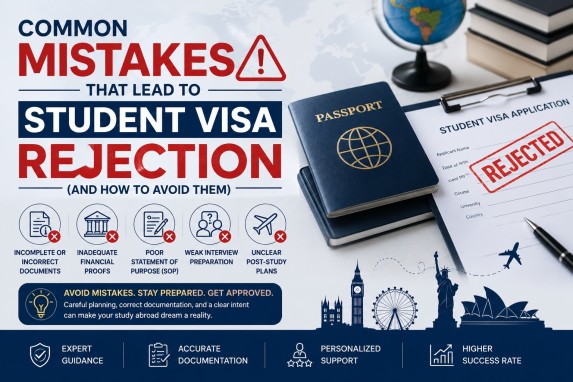
Common Mistakes That Lead to Student Visa Rejection (and How to Avoid Them)
Most student visa refusals aren't caused by one dramatic error — they're usually the result of small, avoidable gaps: a financial document that doesn't quite add up, an SOP that reads like a template, or a form filled out in a hurry. Knowing what visa officers actually check for makes it possible to catch these issues before submission, rather than after a refusal letter arrives. Here's a rundown of the mistakes that come up most often, and how Volumaax helps students avoid them.
Mistake 1: Unclear or Insufficient Financial Proof
Visa officers need to see a clear, traceable source of funds that covers tuition and living costs for the program duration. Large, unexplained deposits, funds that appear only shortly before applying, or sponsorship letters without matching bank statements are common red flags. The fix is straightforward: funds should be sourced clearly and documented consistently well ahead of the application.
Mistake 2: A Generic or Inconsistent SOP
A Statement of Purpose copied from a template, or one that doesn't logically connect academic background, chosen course, and career goals, is one of the most frequently cited issues in refusals. It doesn't need to be elaborate — it needs to be genuine and consistent with the rest of the application.
Mistake 3: Mismatched or Inconsistent Documents
Small inconsistencies — a name spelled differently across documents, mismatched dates of birth, or figures in the SOP that don't match the bank statement — can raise doubts even when each document is individually genuine. Every document in the application should be cross-checked against the others before submission.
Mistake 4: Applying Too Close to the Intake Date
Applying at the last minute doesn't cause a rejection on its own, but it removes any buffer to fix a missing document, reschedule biometrics, or respond to an additional request from the consulate. Building in extra time reduces the pressure that often leads to rushed, incomplete submissions.
Mistake 5: Walking Into the Interview Unprepared
Where an interview is required, officers are checking for clarity and consistency in real time — how well the applicant can explain their course choice, financial plan, and post-study intentions in their own words. Memorized, script-like answers that don't match the written application can work against the applicant.
Mistake 6: An Unexplained Gap or Mismatch in Academic History
A study gap, a change in academic stream, or a course that doesn't obviously follow from prior education isn't disqualifying on its own, but it needs to be addressed directly in the SOP rather than left unexplained. Leaving it out entirely often reads as more concerning than addressing it clearly.
Quick Self-Check Before You Apply
| Check | What to Confirm |
|---|---|
| Finances | Funds are sourced clearly and match figures stated elsewhere in the application |
| SOP | Reflects your own academic history and reasoning, not a generic template |
| Documents | Names, dates, and figures match exactly across every form |
| Timeline | Applied with enough buffer before the intake for corrections or delays |
| Interview readiness | Able to explain course, finances, and plans clearly without a script |
How Volumaax Helps You Avoid These Mistakes
Volumaax reviews financial documentation, SOPs, and supporting paperwork against current embassy and consulate requirements before submission, and checks every document for consistency across the application. Interview preparation is built around the student's actual profile rather than a generic script. This preventive review sits alongside Volumaax's broader consulting process, covered in the guide on how Volumaax helps students with visa consulting, and complements the guide on reapplying after a visa refusal or exam setback for students who've already faced one of these issues.
About to submit your student visa application?
Get your documents, SOP, and finances checked by Volumaax before you apply.
Book a ConsultationFrequently Asked Questions
What is the most common mistake that leads to student visa rejection?
Unclear or insufficient proof of financial support is one of the most common reasons for student visa rejection, followed closely by a weak or generic Statement of Purpose that doesn't clearly connect the applicant's background to their study plans.
Can inconsistent documents cause a visa rejection?
Yes, mismatched names, dates, or figures across the application form, financial documents, and academic records can raise doubts for a visa officer and contribute to a refusal, even if each document is individually valid.
Does applying too close to the course start date affect visa approval?
Applying too close to the intake date doesn't itself cause a rejection, but it leaves little room to fix documentation issues or reschedule an interview, which can increase the risk of an incomplete or rushed application.
Can a poorly written SOP get a visa application rejected?
Yes, a Statement of Purpose that is generic, inconsistent with the applicant's academic history, or unclear about future plans is one of the most frequently cited issues in student visa refusals.
How does Volumaax help students avoid these mistakes?
Volumaax reviews financial documentation, SOPs, and supporting paperwork against current embassy and consulate requirements before submission, and helps students prepare for the interview, aiming to catch inconsistencies before they become a reason for refusal.
Disclaimer: This article is for general informational purposes only and does not guarantee visa approval. Visa requirements and evaluation criteria vary by country and consulate and are subject to change. Applicants are advised to verify current requirements on official government and embassy/consulate websites before applying.


